
Canon T50 Instruction Manual: A Comprehensive Guide

This guide provides detailed instructions for the Canon T50, a popular film SLR camera, offering a comprehensive resource for users of all experience levels.
The Canon T50, a 35mm film SLR, stands as a testament to Canon’s enduring commitment to photographic excellence. Widely embraced by photographers, this camera boasts a versatile feature set, making it suitable for both beginners and experienced enthusiasts. Its ability to accommodate Canon’s extensive range of FD lenses unlocks creative potential.
This camera is truly designed for everyone, regardless of their photographic journey. Understanding its functions through this manual will empower you to capture stunning images.
Availability of the Instruction Manual
The Canon T50 instruction manual is readily accessible online, offering a convenient way to learn about your camera’s features. You can easily download a PDF version containing detailed information and instructions. Several online libraries host this manual, providing free access to all users.
These downloadable PDF files are compatible with Adobe Acrobat and similar PDF readers, ensuring easy viewing and reference for optimal camera operation.
Downloading the PDF Manual
Downloading your Canon T50 manual as a PDF is straightforward. Numerous websites offer this service, allowing you to access the complete guide with ease. Simply locate a reputable source, click the download link, and save the file to your device.
Ensure you have a PDF reader installed, such as Adobe Acrobat, to open and view the manual effectively. This provides a readily available resource for quick reference and troubleshooting.
Camera Overview
The Canon T50 is a 35mm film SLR camera celebrated for its user-friendly design and versatile features. It’s a fantastic option for both beginners and experienced photographers seeking a reliable and capable film camera.
Its compatibility with Canon’s extensive FD lens system unlocks a world of creative possibilities, allowing for diverse photographic styles and professional-quality results.
Key Features of the Canon T50
The Canon T50 boasts several key features, including shutter priority mode for controlling motion, aperture priority for depth of field, and full manual control for experienced users. Its electronic shutter provides a wide range of speeds.
Compatibility with Canon FD lenses is a major advantage, and the camera’s lightweight build enhances portability. It’s truly a camera designed for everyone, regardless of skill level.
Target Audience and Experience Level
The Canon T50 is ideally suited for both beginner and experienced photographers. Its automated modes simplify operation for newcomers, while manual controls offer creative flexibility for seasoned users.
The camera’s versatility makes it a great learning tool, and its compatibility with a wide range of Canon FD lenses allows for photographic exploration. It’s truly a camera for all!
Understanding the Camera Body
The Canon T50 features a robust and ergonomic body designed for comfortable handling. Familiarizing yourself with the layout of controls is crucial for efficient operation.
The top and rear panels house essential functions, including shutter speed selection, aperture control, and film advance mechanisms. Understanding these elements unlocks the camera’s full potential, enabling precise adjustments for optimal image capture.
Top Panel Controls
The Canon T50’s top panel features the main power switch, shutter speed dial, and film advance lever. The shutter speed dial allows selection from a range of speeds, influencing motion blur and exposure.
The film advance lever not only advances the film but also cocks the shutter. Additionally, the panel includes the rewind crank for safely retracting exposed film, completing the shooting process efficiently.
Rear Panel Controls
The Canon T50’s rear panel houses essential controls for operation. These include the film rewind release button, crucial for safely retracting film after exposure; The frame counter displays the number of shots taken, aiding in film management.
Furthermore, the panel features the shutter release button and a dial for exposure compensation, allowing adjustments for optimal image brightness. These controls contribute to a user-friendly shooting experience.
Loading Film
Loading film into the Canon T50 is a straightforward process. First, open the camera back using the film release latch. Next, insert the 35mm film cartridge into the film chamber, ensuring it seats correctly. Thread the film leader onto the take-up spool and gently advance the film using the rewind crank.
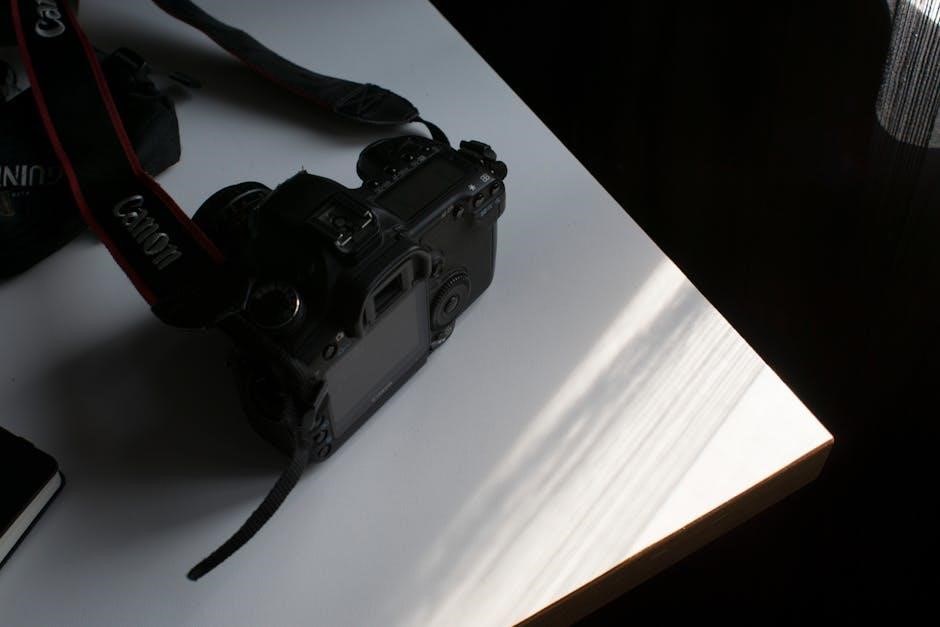
Confirm the film is properly engaged before closing the camera back, preventing potential damage or exposure issues during shooting.
Film Type Compatibility
The Canon T50 is designed for use with standard 35mm film, accommodating a wide range of black and white, color negative, and slide (transparency) films. ISO speeds from 25 to 3200 are generally supported, allowing versatility in various lighting conditions.
Ensure the film is correctly loaded and the ISO setting on the camera matches the film’s speed for accurate exposures. DX-coded films are automatically recognized.
Film Loading Procedure
To load film, open the camera back using the film release lever. Insert the film canister into the right-side chamber and pull the film leader across to the take-up spool on the left. Ensure the film perforations engage with the sprockets.
Advance the film using the winding lever, checking that the film is securely attached to the take-up spool before closing the camera back.
Basic Shooting Modes
The Canon T50 offers versatile shooting modes for varied photographic scenarios. Shutter Priority Mode allows you to select the shutter speed, while the camera automatically adjusts the aperture for correct exposure. Conversely, Aperture Priority Mode lets you control the aperture, with the camera setting the appropriate shutter speed.
These modes provide creative control, balancing motion blur and depth of field.
Shutter Priority Mode
In Shutter Priority Mode on the Canon T50, the photographer dictates the shutter speed, controlling how long the film is exposed to light. This is ideal for capturing fast-moving subjects, freezing action with a quick shutter speed, or creating motion blur with a slower one.
The camera then automatically selects the appropriate aperture setting to achieve proper exposure, simplifying the process.

Aperture Priority Mode
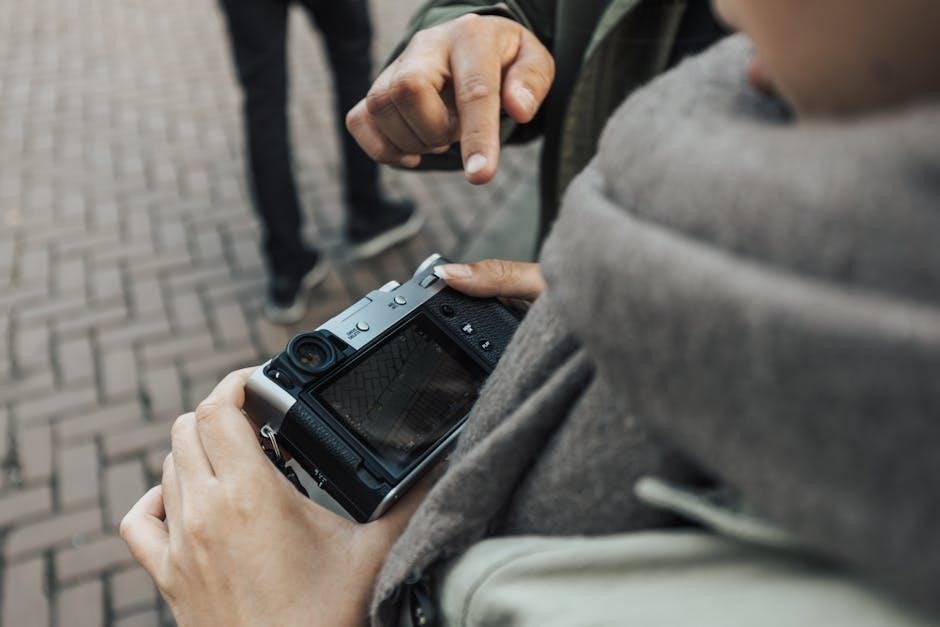
Aperture Priority Mode on the Canon T50 allows photographers to manually set the lens aperture, influencing the depth of field – the area in focus. A wider aperture (smaller f-number) creates a shallow depth of field, ideal for portraits with blurred backgrounds.
Conversely, a narrower aperture (larger f-number) maximizes depth of field, suitable for landscapes. The camera automatically adjusts the shutter speed for correct exposure.
Focusing System
The Canon T50 utilizes a manual focusing system, requiring the photographer to adjust the focusing ring on the FD lens until the subject appears sharp in the viewfinder. The focusing screen provides visual aids to assist in achieving accurate focus.

Careful observation of the image on the focusing screen is crucial for sharp results, especially when using wider apertures and shallow depths of field.
Manual Focusing
Manual focusing on the Canon T50 involves rotating the focusing ring on the attached FD lens until the desired subject appears sharply defined within the viewfinder’s focusing screen. This requires a deliberate and practiced technique.
Pay close attention to the split-image rangefinder or fine-focusing aids within the screen to achieve optimal sharpness, particularly when working with fast lenses and shallow depths of field.
Focusing Screen Information
The Canon T50’s focusing screen incorporates a split-image rangefinder at the center, aiding precise manual focusing. When the image is in focus, the two split sections align perfectly. Surrounding this is a microprism collar, offering easier focusing for slightly off-center subjects.
Utilize these aids alongside the viewfinder’s markings to ensure critical sharpness, especially when using lenses with larger apertures and shallow depths of field.
Using Canon FD Lenses
The Canon T50 utilizes Canon’s FD lens mount, offering compatibility with a vast range of over 50 interchangeable FD lenses. This system allows photographers to explore diverse focal lengths and lens characteristics, enhancing creative possibilities.
Ensure proper alignment when mounting lenses; a secure connection is crucial for accurate operation. The FD system provides full aperture control, enabling precise exposure settings.
Lens Compatibility
The Canon T50 is specifically designed for use with Canon’s FD (Focusing Distinctive) lens series. This includes a wide variety of lenses, from standard 50mm primes to telephoto zooms, offering versatility for different photographic needs.
While primarily intended for FD lenses, adapters may exist for other lens mounts, but compatibility and functionality aren’t guaranteed. Always prioritize genuine FD lenses for optimal performance and image quality.
Interchangeable Lens System
A key feature of the Canon T50 is its interchangeable lens system, allowing photographers to adapt the camera to various shooting situations. Easily swap lenses to achieve different focal lengths and perspectives, expanding creative possibilities.
This system provides access to over 50 Canon FD lenses, offering options for wide-angle, standard, and telephoto photography. The bayonet mount ensures a secure and reliable connection between the camera body and the lens.
Troubleshooting Common Issues
Canon T50 users occasionally encounter problems, most notably a stuck shutter, preventing image capture. This often requires professional attention, but basic checks – battery condition and film loading – should be performed first.
General malfunctions may indicate internal issues needing repair. Online resources and service manuals can aid diagnosis, though complex repairs are best left to qualified technicians. Remember to consult repair manuals for detailed guidance.
Stuck Shutter Problems
A common Canon T50 issue is a stuck shutter, preventing operation. Often, this necessitates repair, as internal mechanisms may be jammed. Before seeking professional help, ensure the battery is fresh and correctly installed. Verify proper film loading, as incorrect loading can sometimes cause shutter issues.
If the problem persists, consult a service manual or a qualified camera technician. Attempting self-repair without expertise could cause further damage.
General Camera Malfunctions
Beyond a stuck shutter, the Canon T50 can experience various malfunctions. These include light leaks, inaccurate metering, or issues with film advance. Often, these problems stem from age and wear of internal components. Regularly cleaning the camera body and lenses can prevent some issues.
For complex malfunctions, seeking professional repair is recommended. Online resources and repair manuals may offer guidance, but proceed with caution to avoid further damage.

Maintenance and Care
Proper Canon T50 maintenance ensures longevity and optimal performance. Regularly clean the camera body with a soft, dry cloth to remove dust and debris. Avoid using harsh chemicals or liquids. Lens care is equally crucial; use a lens brush and cleaning solution specifically designed for camera lenses.
Store the camera in a dry, dust-free environment when not in use, protecting it from extreme temperatures and humidity.
Cleaning the Camera Body
To maintain your Canon T50, gently clean the exterior with a soft, dry microfiber cloth. This removes dust, fingerprints, and smudges without scratching the surface. Avoid abrasive cleaners, solvents, or excessive moisture, as these can damage the camera’s finish.
Pay attention to crevices where dust accumulates. A gentle brush can help dislodge particles. Regular cleaning preserves the camera’s appearance and functionality.
Lens Care and Storage
Canon FD lenses require careful handling. Clean the glass elements only with a lens brush and specialized lens cleaning fluid, applying gently with lens paper. Avoid touching the glass surface with your fingers.
When storing lenses, use a cool, dry place, ideally in a dedicated lens case or pouch. Protect from dust, humidity, and direct sunlight to prevent fungus growth and maintain optimal image quality.
Advanced Features
The Canon T50 offers exposure compensation, allowing adjustments to brightness for challenging lighting. Depth of field control, achieved through aperture settings, lets you manage the focus area in your images.
Experiment with these features to enhance creative control. Understanding how they interact will elevate your photography beyond basic point-and-shoot operation, unlocking the camera’s full potential for artistic expression.
Exposure Compensation
Exposure compensation on the Canon T50 allows you to override the camera’s light metering system. This is crucial when shooting scenes with strong backlighting or unusual reflective surfaces. Adjusting the compensation brightens or darkens the image, ensuring proper exposure.
Use this feature to fine-tune your photos, preventing them from being over or underexposed, and achieving the desired aesthetic in various shooting conditions.
Depth of Field Control
Depth of field, controlled by the aperture setting on your Canon T50, dictates how much of the image appears in focus. A wider aperture (smaller f-number) creates a shallow depth of field, ideal for isolating subjects with blurred backgrounds.
Conversely, a narrower aperture (larger f-number) yields a greater depth of field, keeping more of the scene sharp – perfect for landscapes. Mastering this allows creative control.
Battery Information
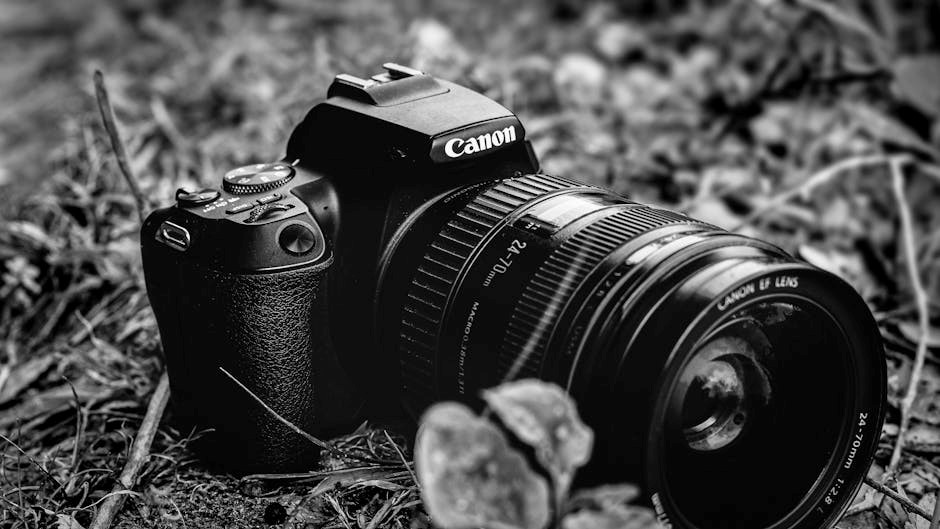
The Canon T50 utilizes a standard 4LR44/PX28 battery to power its electronic functions, including the light meter. Proper battery installation ensures accurate exposure readings. Always observe correct polarity when inserting the battery into the camera compartment.
Battery life varies with usage, but expect several months of typical use. Replace the battery when the low battery indicator appears in the viewfinder to maintain optimal performance.
Battery Type and Installation
The Canon T50 requires a 4LR44 6V alkaline battery, or its equivalent PX28. To install, locate the battery compartment on the bottom of the camera. Gently slide the battery compartment cover open. Insert the battery, ensuring the positive (+) and negative (-) terminals align with the markings inside the compartment.
Securely close the battery compartment cover until it clicks. Incorrect installation will prevent the camera from functioning correctly.
Battery Life and Replacement
The Canon T50’s battery life varies depending on usage, but typically lasts for approximately 20-30 rolls of 36-exposure film. Battery life is reduced with frequent use of the light meter or prolonged storage in cold temperatures.
When the battery is low, a battery warning light will illuminate in the viewfinder. Replace the 4LR44/PX28 battery promptly to ensure continued camera operation and accurate metering.
Technical Specifications

The Canon T50 utilizes standard 35mm film, supporting a range of ISO speeds from 25 to 3200. Its electronically controlled shutter speed spans from 2 seconds to 1/1000th of a second, plus Bulb mode for long exposures. The camera features a horizontal-travel focal-plane shutter, ensuring accurate exposure control.
It also boasts a built-in CdS light meter for TTL center-weighted averaging exposure measurement.
Film Format
The Canon T50 is designed to work with standard 35mm film, a widely available and versatile format for photography. This camera accommodates various film types, including color negative, color slide (transparency), and black and white film. Users can select film with ISO sensitivities ranging from 25 to 3200, allowing for shooting in diverse lighting conditions.
Proper film loading is crucial for optimal performance;
Shutter Speed Range
The Canon T50 offers a versatile shutter speed range, providing photographers with control over exposure and creative effects. It features speeds from 2 seconds to 1/1000th of a second, alongside a bulb (B) setting for long exposures. This range allows for capturing motion blur, freezing action, and shooting in various lighting scenarios.
Electronic shutter control ensures accuracy.
Resources and Further Information
For additional support and information regarding the Canon T50, numerous online resources are available. Websites host downloadable PDF versions of the original instruction manual, offering detailed guidance. Online camera manual libraries, like those maintained by M. Butkus, provide free access to documentation.
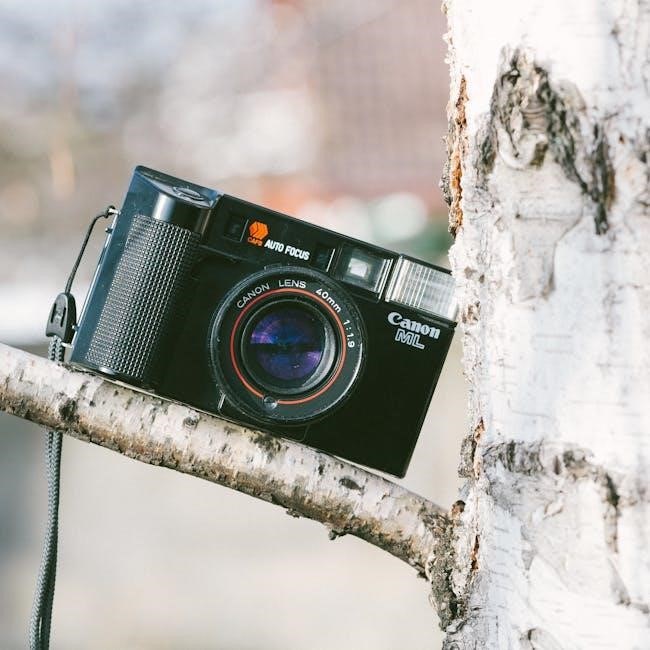
Repair manuals can also be sourced online, aiding in troubleshooting.
Online Manual Libraries
Several online manual libraries offer free access to the Canon T50 instruction manual in PDF format. These resources, such as those curated by M. Butkus, provide a valuable service by preserving and sharing vintage camera documentation. Downloading from these sites often requires no cost, unlike commercial vendors.
Consider a donation to support these archives!
Repair Manual Availability
Finding a dedicated service or repair manual for the Canon T50 can be challenging, but not impossible. Online forums and communities dedicated to vintage cameras often discuss repair procedures and may offer insights. Almost every camera possesses a service manual, though locating one requires diligent searching.
These resources can aid in troubleshooting shutter issues.